
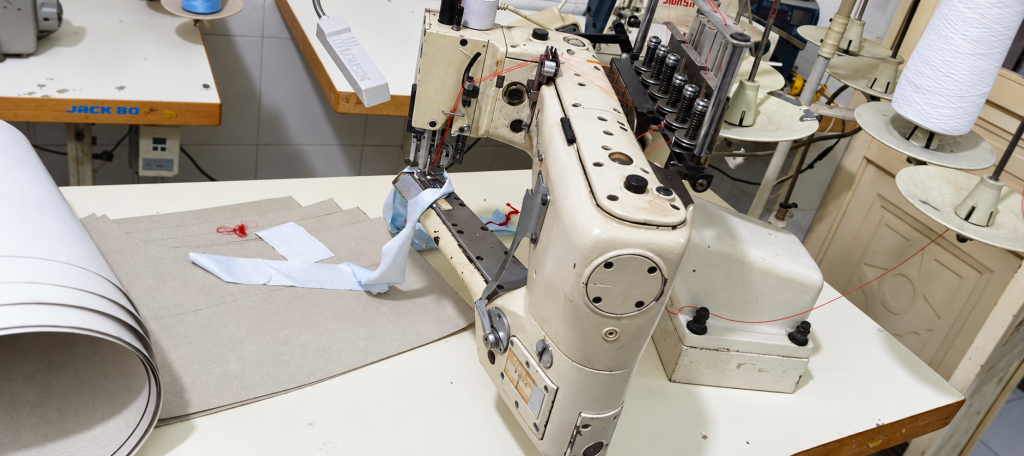
For gym and yoga clothing, comfort during movement matters as much as fabric and fit. Four-needle, six-thread flatlock stitching is one option to consider when developing premium activewear.
ANGEL explains how this seam works and what brands should check during sampling and production.
What is four-needle, six-thread flatlock stitching?
Flatlock machines create a low-bulk join between fabric panels. A four-needle, six-thread configuration uses four needles and six threads in total. The thread structure spreads across the joining area, helping reduce the ridge against the skin. The finished result depends on the seam construction, fabric thickness, thread and machine settings.
Why consider flatlock for gym and yoga clothing?
Reduced seam bulk
A low-profile join can help reduce rubbing and discomfort in close-fitting garments such as leggings, sports bras and training tops.
Compatibility with stretch fabrics
A suitable stitch structure helps the join accommodate fabric movement. Stretch performance also depends on thread choice, stitch density, tension and feeding settings. Always test the seam on the actual production fabric.
Reliable construction when properly tested
A well-made seam can provide a stable join. Assess durability through sample inspection, stretch testing and wash trials. Thread count alone does not establish a garment’s strength or compliance with a buyer’s requirements.
A distinctive sportswear detail
Matching or contrasting threads can turn the seam into a design feature. Fit and shaping still depend on pattern development, fabric and wear trials.
Does all premium activewear need flatlock?
No. The right seam depends on the design, joining position, fabric, fit and intended use. Other stitch constructions can also suit premium garments when they meet the product specification.
Quality control steps for flatlock production
Before placing a bulk order, brands and manufacturers should agree on an approved seam sample and clear inspection criteria.
- Check the fabric and cut components: assess thickness, stretch direction and stability; cut to the approved pattern and seam construction.
- Set up and sample the seam: choose suitable needles, threads, stitch density, tension and feeding settings. Test with the actual order materials.
- Join the panels: maintain consistent feeding and alignment, checking for puckering, twisting, skipped stitches and exposed edges.
- Inspect the garment: examine both sides, seam ends and crossing points; check stretch behaviour and finished measurements.
- Conduct wear and wash trials: assess comfort, recovery and seam condition before approving bulk production.
Develop your activewear samples with ANGEL
Building a gym and yoga collection requires fabric selection, pattern development and seam planning from the sampling stage. Send ANGEL your design references, fabric details, expected quantities and seam requirements to discuss a suitable production approach.
ANGEL welcomes enquiries about sportswear pattern development, sampling and garment manufacturing to customer designs.
Phone: +84 909 260 115 · Contact ANGEL on Zalo
Chat on WhatsApp: +84 909 260 115
Technical reference: PEGASUS four-needle, six-thread flatseamer specifications. This reference does not identify the machine model shown in the photograph.
Edited by ANGEL
Thank you for reading. Share your thoughts in the comment box below.